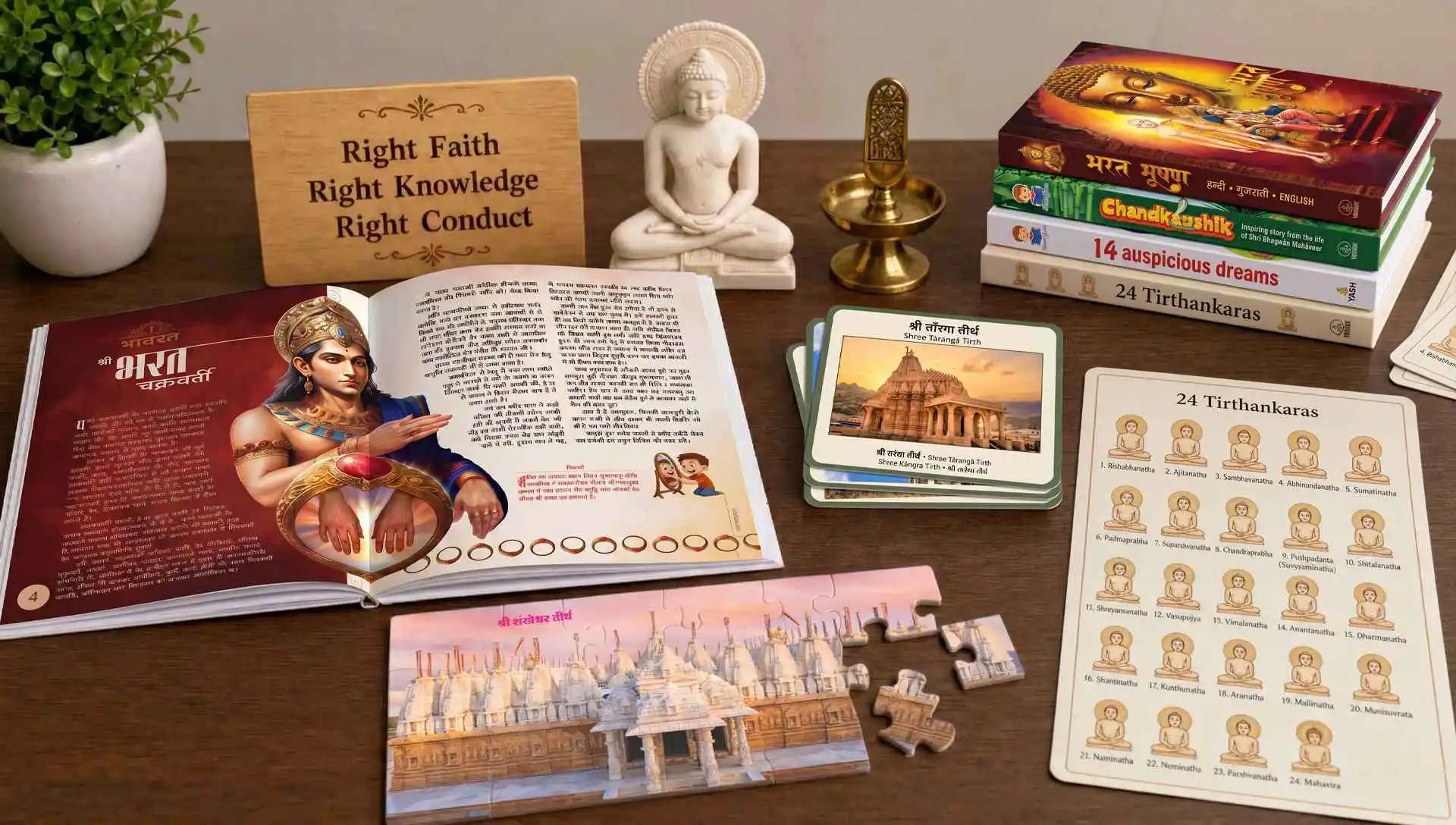
Choosing Jain religion books for children is not just about finding a shorter or more colourful version of an adult text. A good children’s book should make Jain values feel understandable, joyful and relevant to everyday life, whether your child is learning their first prayer, asking why we avoid harm, or beginning to explore the lives of the Tirthankaras.
For many families, the challenge is that children grow up surrounded by many influences, school, friends, screens, festivals, family traditions and multiple languages. The right book becomes a bridge between all of these. It helps a child connect Jain wisdom with choices they actually make, such as speaking kindly, wasting less, being gentle with living beings, and practising gratitude.
This guide will help you choose Jain books by age, language, purpose, reading level and spiritual depth, so that your child’s learning feels natural rather than forced.
Begin with your child’s age and curiosity
The best Jain book for a child is the one they can understand today and grow with tomorrow. A preschool child may enjoy bright pictures and repeated phrases, while an older child may want stories that answer questions like, “Why do we fast?” or “What is karma?”
Instead of asking, “Which is the most complete Jain book?” ask, “What is my child ready to receive right now?” Children build religious understanding gradually. Early books should create affection and familiarity. Later books can introduce deeper ideas such as samyak darshan, karma theory, aparigraha and moksha.
| Child’s age | What they usually need | Suitable Jain book formats |
|---|---|---|
| 0 to 3 years | Sounds, pictures, repetition and family bonding | Board books, picture books, prayer cards, simple visual books |
| 4 to 6 years | Short stories, clear morals and colourful illustrations | Storybooks on kindness, ahimsa, sharing, festivals and basic prayers |
| 7 to 9 years | Why-based explanations and relatable examples | Illustrated biographies, activity books, value-based stories and beginner concept books |
| 10 to 12 years | More detail, moral reflection and independent reading | Books on Tirthankaras, Jain principles, rituals, festivals and discussion-based stories |
| 13 years and above | Deeper meaning, identity and reasoning | Introductory philosophy, ethics, Jain history and simplified scripture-based learning |
This age-based approach prevents two common problems. The first is giving a child a book that is too advanced, which can make Jainism feel difficult. The second is giving an older child only baby-level content, which may make them feel disconnected or uninterested.
Match the book to the learning goal
Not every Jain book serves the same purpose. Some books build devotion, some explain values, some teach rituals, and some introduce Jain history. Before buying, decide what you want the book to do.
If your child is new to Jain learning, begin with books that connect religion to daily life. Stories about not hurting insects, sharing food, speaking truthfully, asking for forgiveness and reducing greed often work better than abstract explanations. Once the child feels emotionally connected, you can add books about prayers, Tirthankaras, festivals and core philosophy.
For example, a child-friendly English learning title such as My Lord can be a gentle starting point for families looking for accessible Jain reading material. If you want to focus on ahimsa as a living value, a themed book such as Dwidal can help children see non-violence as more than a word they hear during pravachan.
A balanced Jain bookshelf usually includes a mix of these goals:
- Devotion, such as Navkar Mantra, stavan, darshan and daily prayer habits.
- Values, such as ahimsa, satya, asteya, aparigraha, forgiveness and compassion.
- Identity, such as stories of Tirthankaras, Bhagwan Mahavir and Jain festivals.
- Practice, such as food choices, samayik, pratikraman, fasting and seva.
- Reflection, such as simple questions that help children apply Jain thinking.
When a book has a clear goal, it becomes easier for parents to use it well. A devotional book can be read before sleep. A value-based story can be discussed after school. A festival book can be introduced before Paryushan, Mahavir Janma Kalyanak, Diwali or Ayambil Oli.
Look for accuracy without making the book heavy
Children’s books should simplify Jain concepts, but they should not distort them. Good Jain religion books explain ideas in a way that is age-appropriate while staying respectful to the tradition.
Accuracy matters because children often remember their first explanation for years. If karma is explained only as punishment, the child may grow up fearing religion. If ahimsa is explained only as food restriction, they may miss its deeper meaning of compassion toward all living beings. If rituals are presented as tasks without meaning, children may perform them mechanically and lose interest.
A good book should explain key terms gently. Words like Arihant, Siddha, sadhu, sadhvi, shravak, shravika, jiva, ajiva, punya and paap do not need to be avoided. They simply need context, pronunciation support and examples.
When reviewing a Jain children’s book, ask these questions:
- Does the book explain difficult words in simple language?
- Does it present Jain values positively, rather than through fear or guilt?
- Does it respect differences in family practice, sect tradition and regional custom?
- Does it show how a child can practise the value in daily life?
- Does it encourage questions instead of expecting blind memorisation?
This is especially important in Jain families where children may attend English-medium schools, speak one language at home and hear religious vocabulary in another. The best books help children move comfortably between these worlds.
Choose a language your child can emotionally connect with
Language is not only a reading tool. It is also an emotional connection. Many Jain children in India understand English well because of school, but they may hear religious words in Hindi, Gujarati, Marathi, Kannada or another family language. Some children can recite a sutra but cannot explain its meaning. Others can discuss values in English but feel distant from traditional words.
The right choice depends on your home environment. If your child is just beginning, English books can make concepts approachable. If grandparents are involved in reading, books in the family language may create beautiful bonding. If your child already understands both, bilingual exposure can be very powerful.
India’s National Education Policy 2020 highlights the importance of multilingual learning and connecting education to Indian knowledge systems and culture. Jain learning at home can follow the same spirit. Children can learn the meaning in the language they understand best while slowly becoming familiar with traditional Jain vocabulary.
A practical approach is to read the story in English, repeat key Jain words in the original language, and then ask the child to explain the idea in their own words. This builds understanding, not just recitation.
Prioritise engagement through stories, pictures and activities
Children rarely fall in love with a subject because it is “important”. They engage when it is meaningful, beautiful, interactive or emotionally memorable. Jain books for kids should therefore be more than text on a page. Look for stories, illustrations, questions, activities and examples that make the child pause and think.
For younger children, illustrations help make invisible ideas visible. A picture of a child gently moving an insect, offering water thoughtfully or folding hands during prayer can communicate more than a long explanation. For older children, discussion prompts can turn reading into reflection.
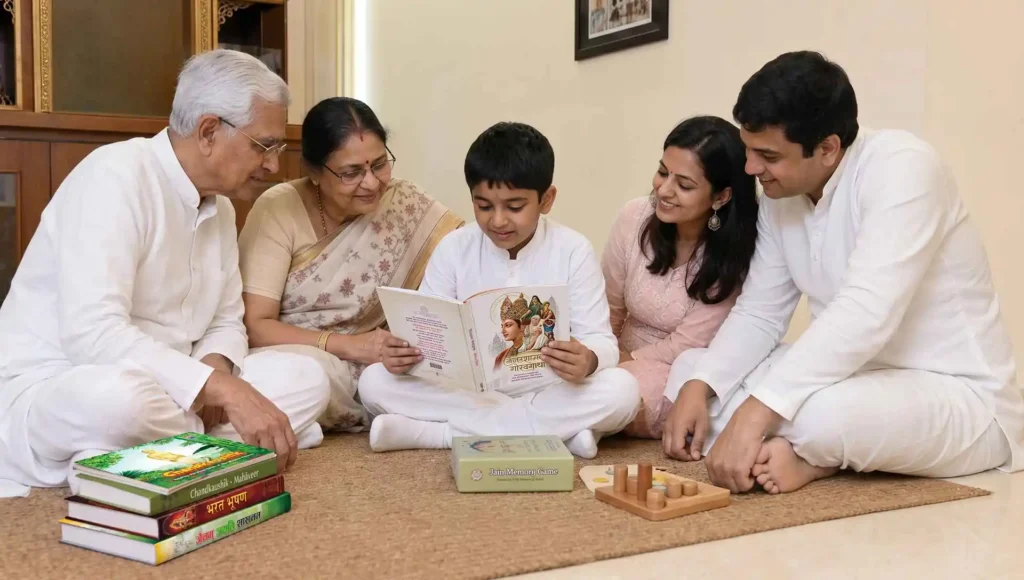
A strong Jain children’s book often follows a simple learning rhythm: read, retell, relate and repeat. First, the child hears or reads the story. Then they retell it in their own words. Next, the parent asks how the value appears in daily life. Finally, the same idea is repeated through prayer, festival practice, art, games or family discussion.
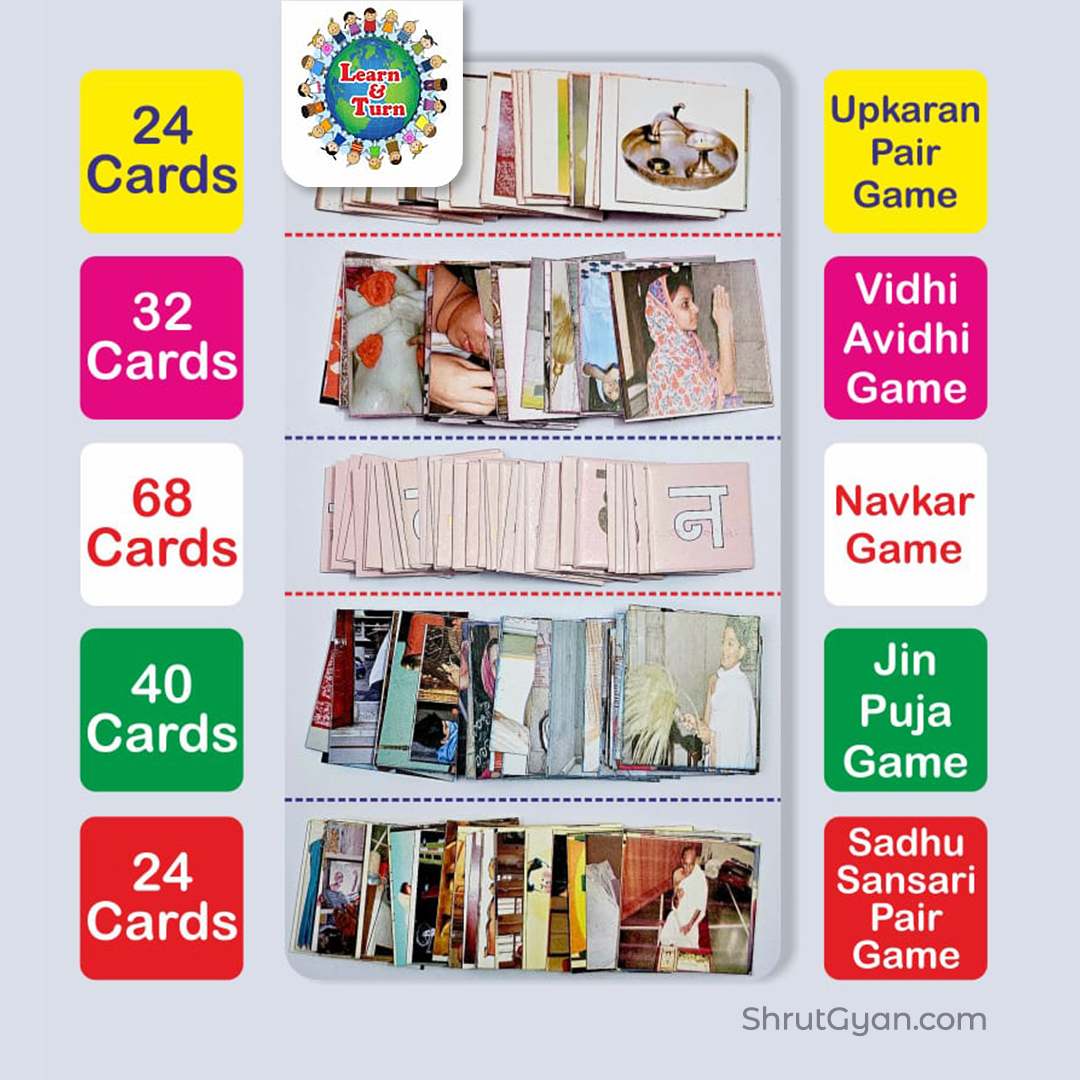
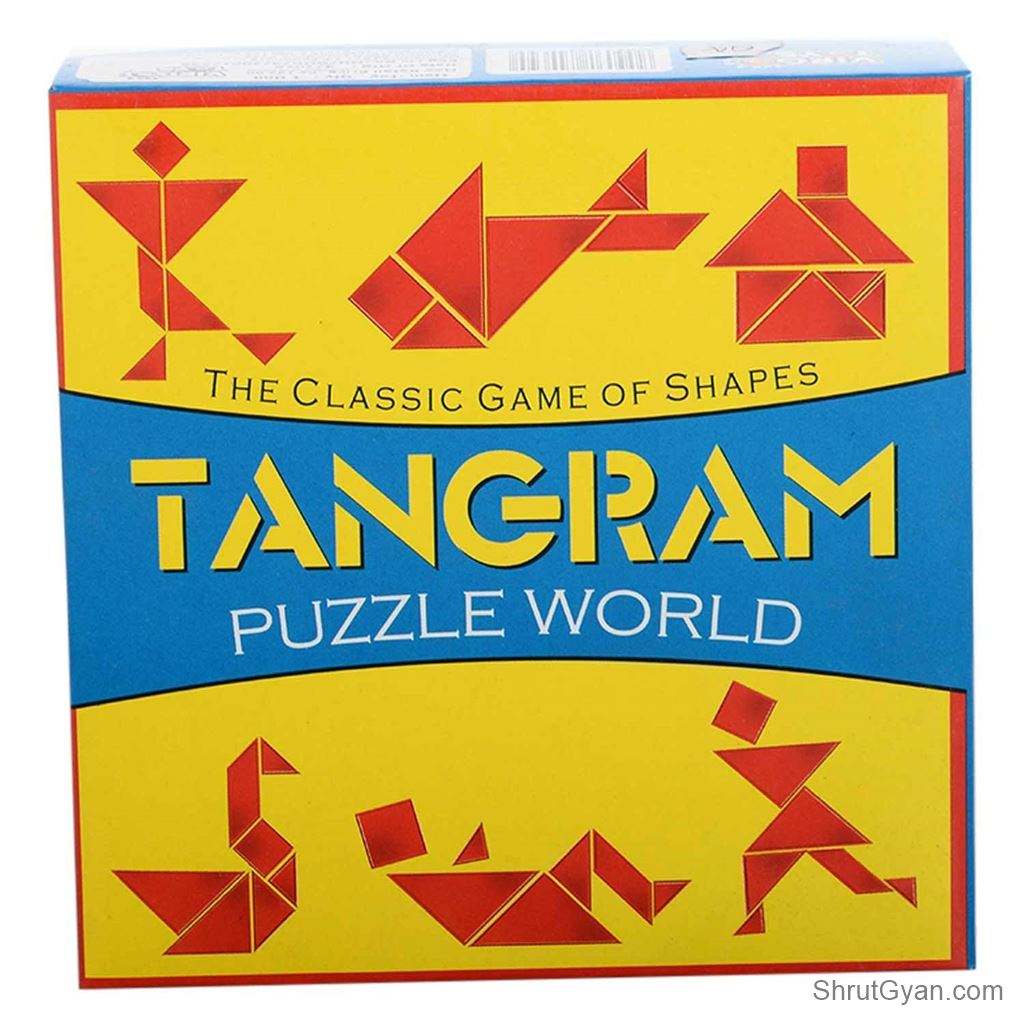
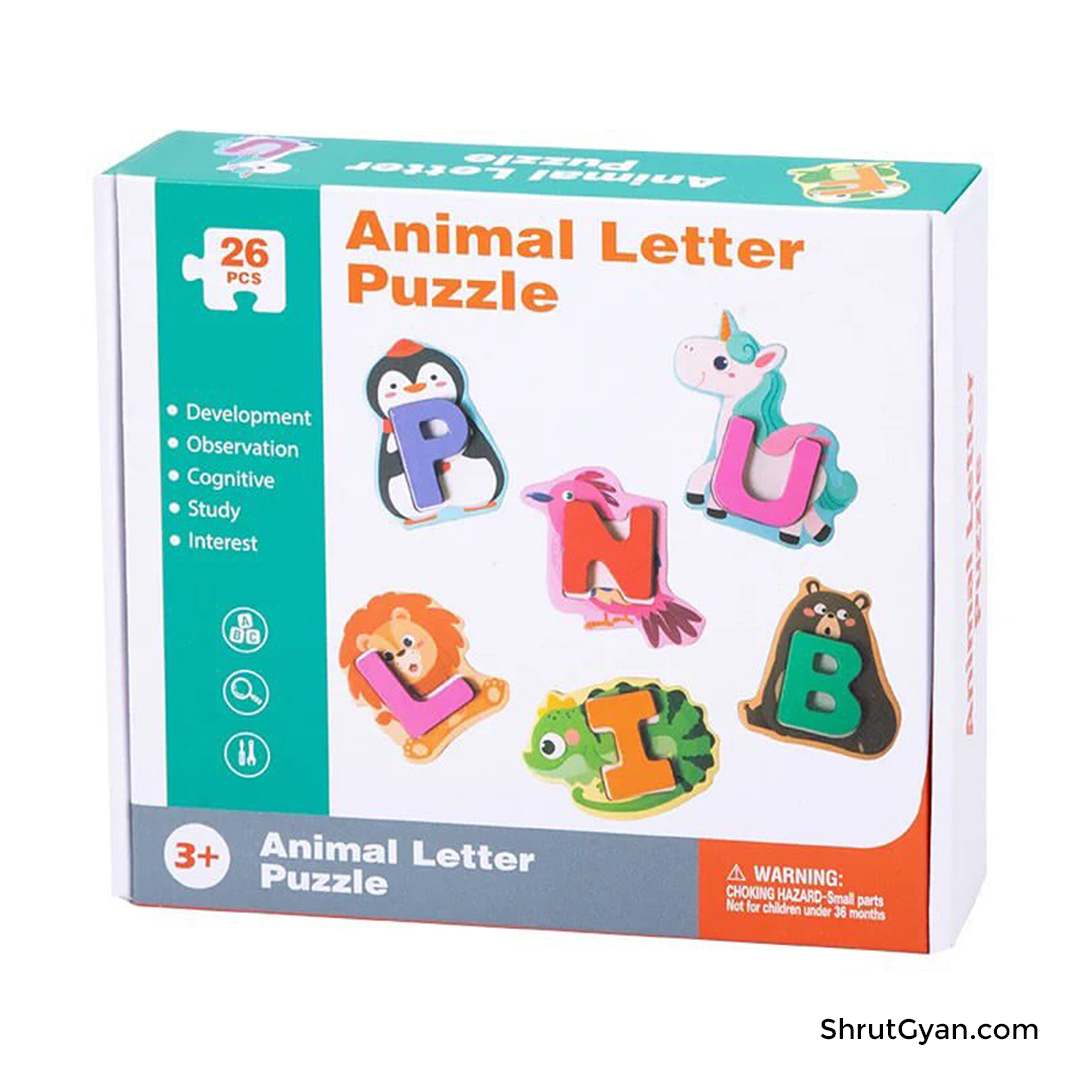
If your child enjoys hands-on learning, combine books with flashcards, puzzles, board games or activity cards. This is especially useful for children who find long reading sessions difficult. Shrut Gyan offers Jain learning resources in different formats, so families can combine reading with play, gifting and devotional learning through age-appropriate Jain educational products.
Build a balanced Jain bookshelf at home
A child does not need a large religious library on day one. In fact, too many books can overwhelm both the child and the parent. Start with a small, balanced set that covers devotion, values, stories and practice.
| Type of book | Why it matters | What to look for |
|---|---|---|
| Prayer and devotion | Builds familiarity with daily Jain practice | Simple meanings, clear pronunciation, gentle illustrations |
| Moral stories | Connects Jain values with daily behaviour | Relatable situations, clear but not preachy lessons |
| Tirthankar stories | Builds Jain identity and reverence | Age-appropriate storytelling and respectful presentation |
| Festival books | Makes celebrations meaningful | Context for Paryushan, Diwali, Mahavir Janma Kalyanak and other observances |
| Activity-based books | Helps children learn through play | Colouring, matching, quizzes, puzzles or reflection prompts |
As your child grows, you can replace simple books with more detailed ones. A five-year-old may first learn that Bhagwan Mahavir taught compassion. A ten-year-old can learn more about renunciation, right faith, right knowledge and right conduct. A teenager can begin asking deeper questions about attachment, non-violence, the soul and liberation.
This gradual approach respects both the child’s development and the depth of Jain dharma.
Check the practical details before buying
Before choosing Jain religion books for children, look beyond the cover. A beautiful cover is helpful, but the inside pages matter more.
Check the age range, reading level, page count and language. If possible, review sample pages or product images. See whether the font is easy to read, whether the illustrations support the message, and whether the book offers explanations that a parent can comfortably discuss.
Also consider how the book will be used. A bedtime book should be short and calming. A festival book can be more detailed because it may be read seasonally. A book used in a pathshala or group setting may need activities, questions or repeatable lessons. A gift book should be attractive, durable and easy for the receiving family to use.
Parents should also think about tone. Children respond better when Jain values are presented as joyful and empowering. A book that says “do this or something bad will happen” may produce obedience for a short time, but it rarely builds love for dharma. A book that says “this choice reduces harm and increases compassion” creates understanding.
Make reading part of family practice
The best Jain book can still fail if it stays closed on a shelf. Children learn from repetition and from seeing adults value the same ideas. A ten-minute reading routine can be more effective than a long lecture once a month.
Try linking books to daily or weekly moments. Read a short story after dinner. Discuss one value every Sunday. Read about forgiveness before Paryushan. Read about aparigraha before cleaning toys or donating unused items. Read about ahimsa before talking about food, nature or how to treat small creatures.
The most powerful question after reading is not “What was the moral?” A better question is, “Where can we practise this tomorrow?” This turns a book into a habit.
If a child resists, do not force long sessions. Read one page. Ask one question. Let the child choose between two books. Invite grandparents to share a related memory. Allow drawing, storytelling or role play after reading. The goal is not to finish a book quickly. The goal is to make Jain wisdom feel close.
Common mistakes parents can avoid
One common mistake is choosing books only because they look scholarly. Children need depth, but they also need warmth. A book that is respected by adults may not be suitable for a seven-year-old if the language is too dense.
Another mistake is treating Jain learning as only memorisation. Sutras and prayers are important, but meaning matters too. When a child understands why Navkar Mantra honours spiritual qualities rather than asking for material rewards, the prayer becomes more meaningful.
Parents may also ignore the child’s preferred language. If the child cannot understand the book, they may wrongly assume that Jainism itself is difficult. Start with the language that opens the door, then gradually introduce traditional terms.
Finally, avoid buying only festival books or only moral stories. Jain dharma includes devotion, conduct, philosophy, discipline, compassion and self-realisation. A child’s bookshelf should slowly reflect that richness.
Frequently Asked Questions
What age is best to introduce Jain religion books to children? You can introduce Jain books from infancy through picture books, prayer cards and simple read-aloud stories. The goal in the early years is familiarity, warmth and bonding. Deeper explanations can come gradually as the child grows.
Should I choose Jain books in English or in my family language? Choose the language your child understands best, especially for concepts and stories. You can still introduce key Jain words in Hindi, Gujarati, Prakrit, Sanskrit or your family language. For many families, a mix of English explanation and traditional vocabulary works well.
How do I know if a Jain children’s book is age-appropriate? Check the sentence length, illustrations, topic depth, vocabulary and emotional tone. If your child can retell the story and connect it to daily life, the book is likely suitable. If they feel confused or frightened, choose something simpler.
Are storybooks enough for Jain learning? Storybooks are an excellent start, but children also benefit from prayer books, activity resources, festival guides and simple explanations of Jain principles. A balanced mix helps them connect devotion, values and practice.
How many Jain books should I buy first? Start with three to five carefully chosen books rather than a large collection. Include one devotional book, one value-based story, one festival or Tirthankar story, and one interactive resource if your child enjoys activities.
Can Jain books help children practise values outside religious settings? Yes. The best Jain books help children apply values at school, at home and with friends. Ahimsa, truthfulness, forgiveness, simplicity and self-control are everyday practices, not only temple or festival ideas.
Help your child grow with Jain wisdom
Choosing the right Jain religion books is really about choosing the right doorway into dharma. Start with your child’s age, language and curiosity. Add books that explain values with love, devotion with meaning and philosophy with patience.
If you are building a Jain learning corner at home, Shrut Gyan brings together books, flashcards, games, puzzles, gift sets and devotional products designed for children and families. Explore the collection and choose resources that make Jain learning engaging, age-appropriate and part of everyday family life.